Home
Hi! As of September 2024 I am a postdoctoral fellow at the Berkeley Center for Cosmological Physics (BCCP), where I work with Prof. Uros Seljak on probabilistic machine learning methods for cosmology. I completed my PhD in physics at Caltech in 2024, under the supervision of Prof. Jamie Bock. I am a member of the SPHEREx, DESI and CIBER/CIBER-2 collaborations.
I work on a number of topics in observational cosmology. I am interested in the development and application of statistical methods that enhance studies of cosmic large-scale structure, using imaging/spectroscopy from galaxy surveys and intensity mapping datasets.
I also moonlight as a developer of the crowded field photometry technique "probabilistic cataloging", (PCAT for short, see Research below for more information).
About Me
I'm originally from Great Neck, New York, where I was lucky to get involved in science research during high school. I am grateful for these opportunities as well as my very first external research internship, for which I was mentored by Dr. Francesca Civano at the Harvard-Smithsonian Center for Astrophysics. I completed my Bachelors in Physics and Astrophysics at Harvard University, where I worked with Douglas Finkbeiner. My research experiences in college helped foster my interest in applying novel statistical methods to extract the most information out of existing and near-future datasets. Following my undergraduate studies, I moved to the west coast to pursue a PhD in Physics at Caltech.
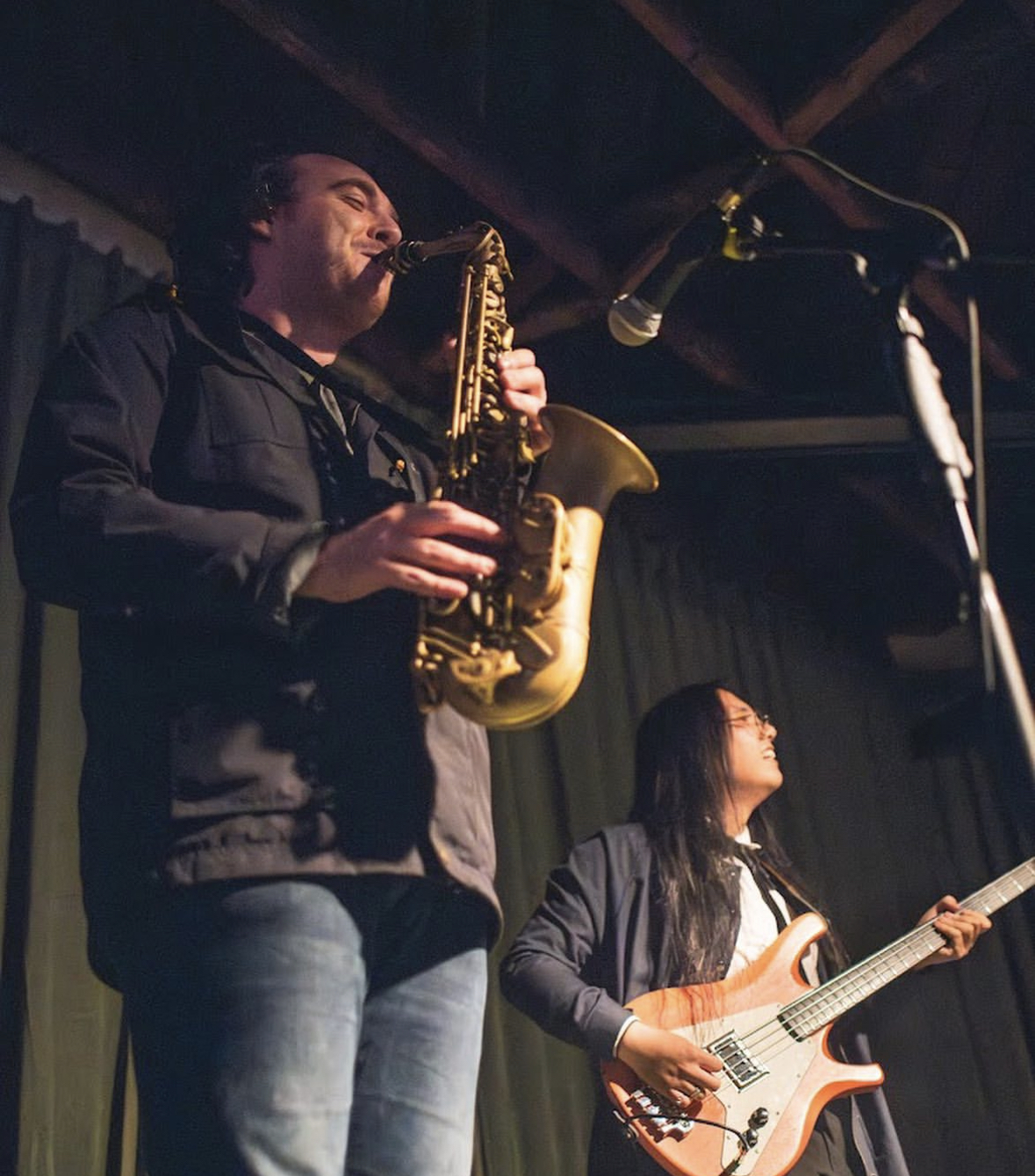
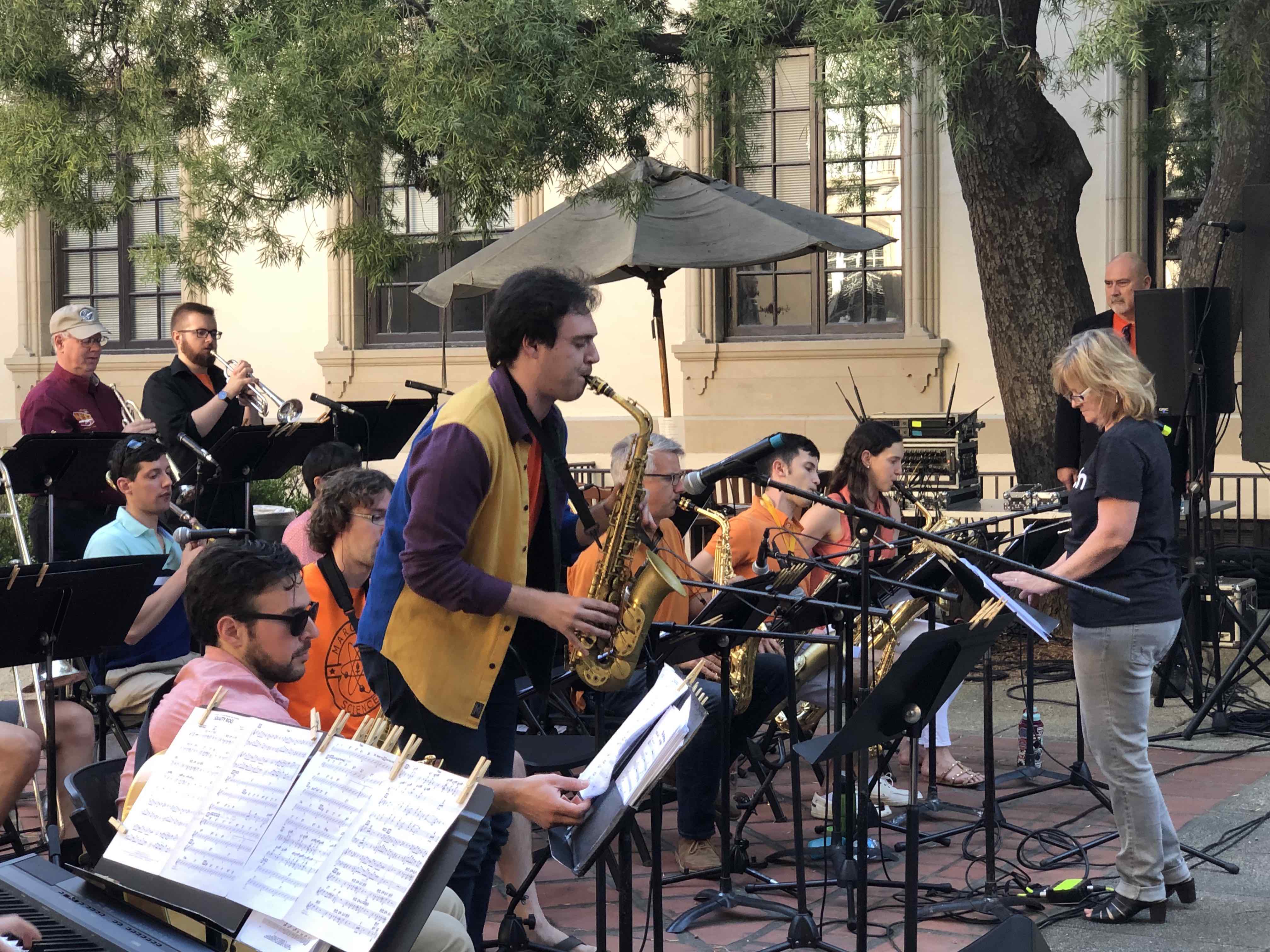
When I am not doing research, I enjoy playing music -- I play saxophone, clarinet and flute through a number of bands. Likewise, after several years on the west coast, my love the outdoors has inevitably grown stronger. I enjoy biking, hiking and camping!
Research
Near-Infrared Intensity Mapping
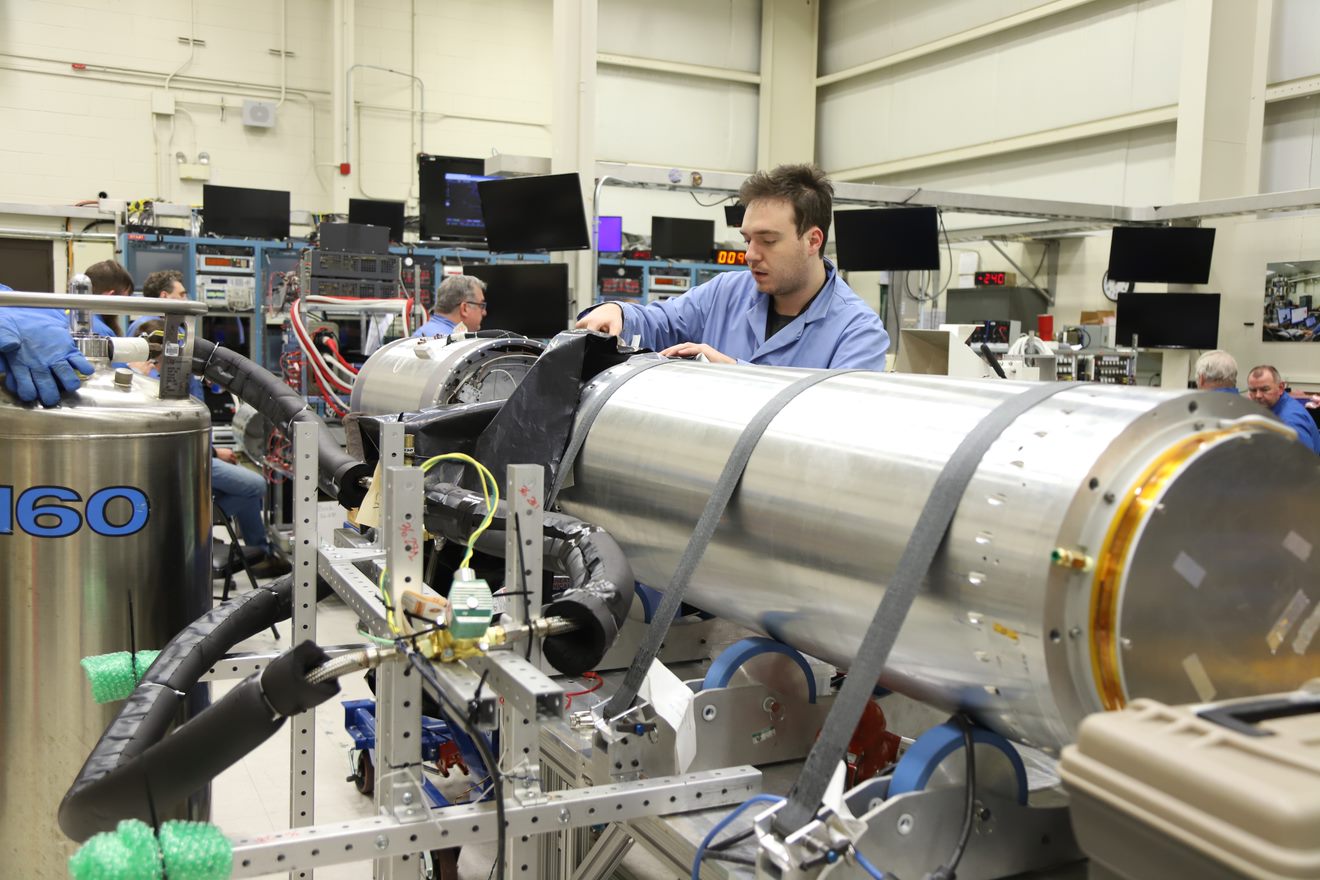
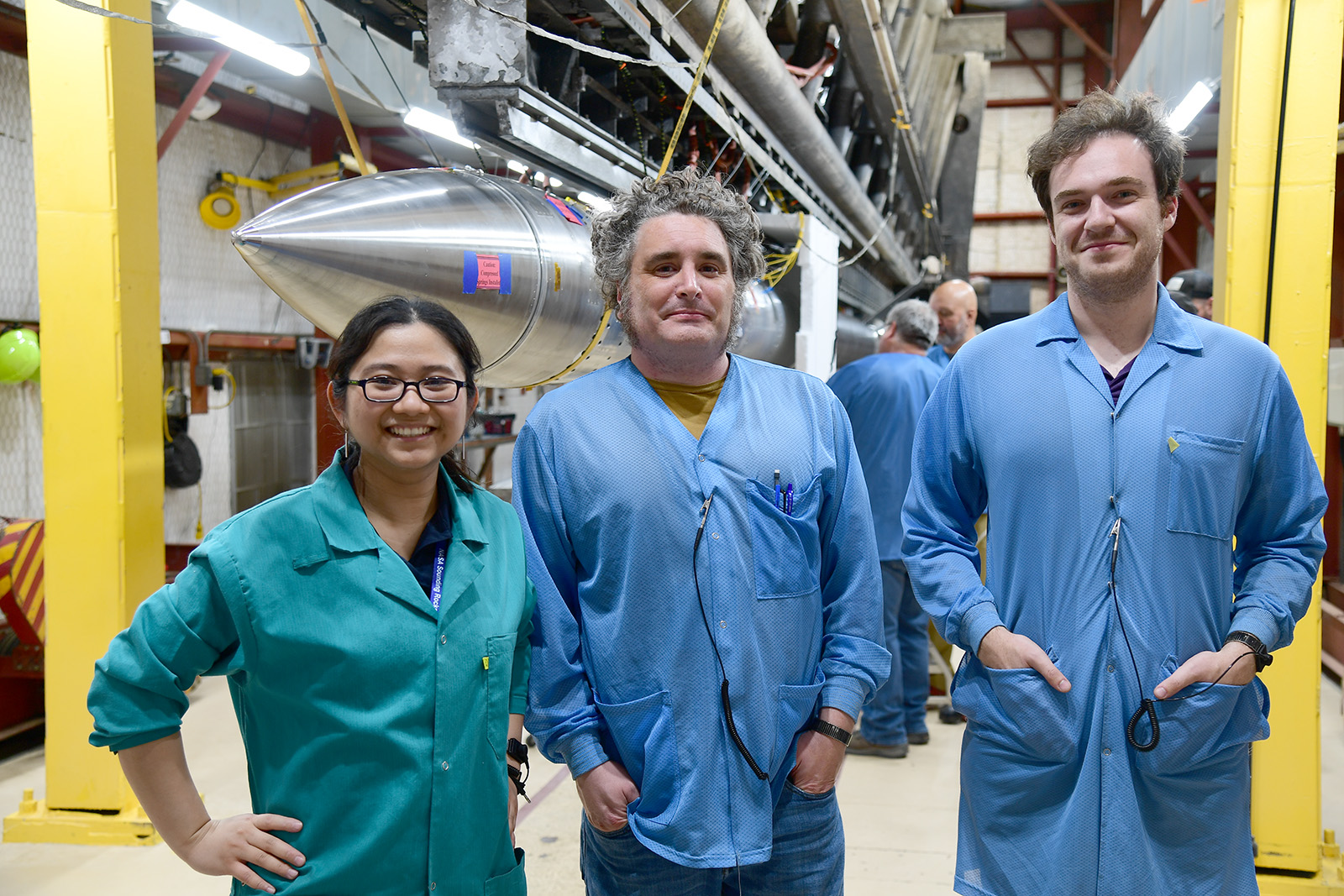
CIBER is a sounding rocket experiment designed to characterize the near-infrared EBL through measurement of fluctuation anisotropies and low-resolution spectroscopy. As a member of the CIBER, I have worked on both data analysis of CIBER-1 data and instrumentation work for its successor CIBER-2. During the first half of my PhD, I built hardware for CIBER-2, ran laboratory measurements to characterize detector performance, and worked through integration of the experiment with the full sounding rocket payload. This work was done in collaboration with NASA's sounding rocket program and involved working at NASA Wallops Flight Facility in Virginia and White Sands Missile Range in Las Cruces, New Mexico, where I participated in a successful first flight and experiment recovery (Press release for CIBER-2 first flight, June 2021).
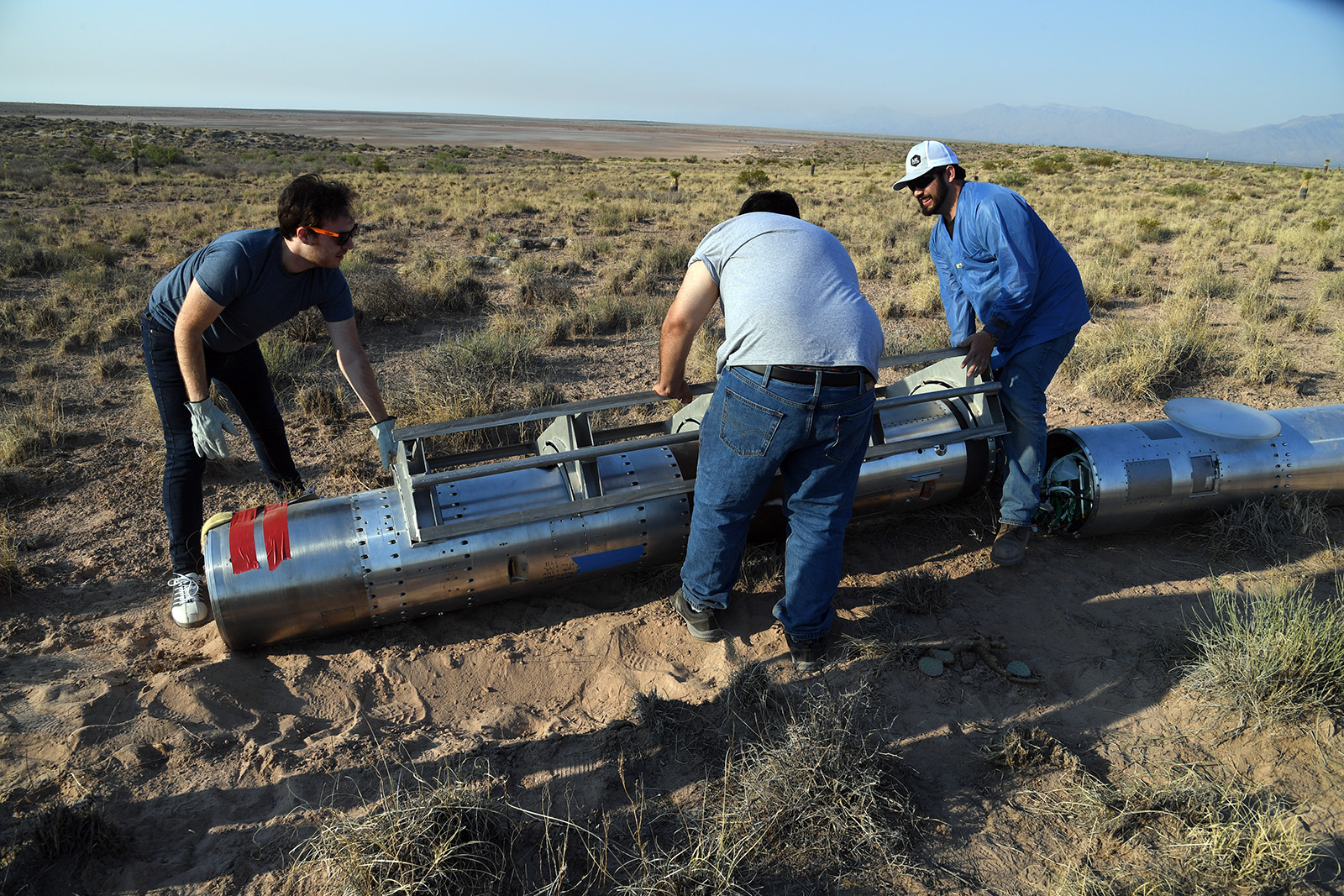
For my dissertation project I am leading a fluctuation analysis of CIBER-1 fourth flight imaging data. Broad band, near infrared intensity mapping has great potential to shed light on interpretations of the extragalactic background light (EBL), which contains the integrated emission from all sources along each line of sight. Through multi- wavelength measurement of large-angle (several arcminute to degree scale) surface brightness fluctuations, we can interpret the relative amplitudes of astrophysical components that comprise the EBL through spatial and spectral cross-correlations. I am also interested in characterizing the intensity bias of NIR fluctuations correlated against galaxy surveys of large-scale structure.
SPHEREx
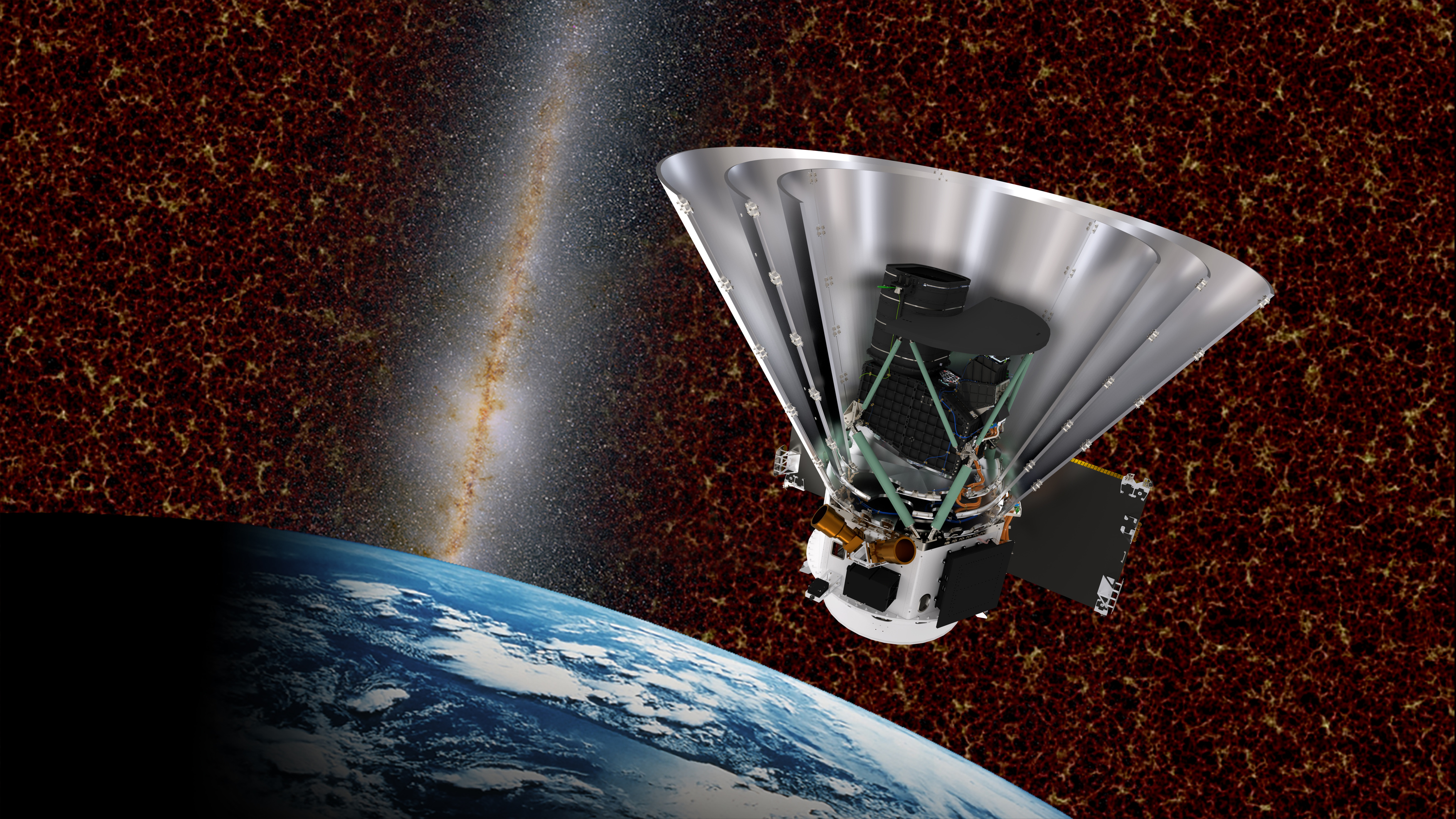
The Spectrophotometer for the History of the Universe, Epoch of Reionization, and Ices Explorer (SPHEREx) is NASA's next MIDEX mission with a current expected launch date in early 2025. Through the same detector and linear variable filter (LVF) technology used by CIBER, SPHEREx will conduct an all sky spectral survey in 102 bands between 0.75-5 micron, producing a low-resolution spectrum for every 6 x 6 arcsecond line of sight on the sky. The nominal two-year survey will revolutionize studies of NIR intensity mapping through a huge jump in coverage and increased sensitivity.
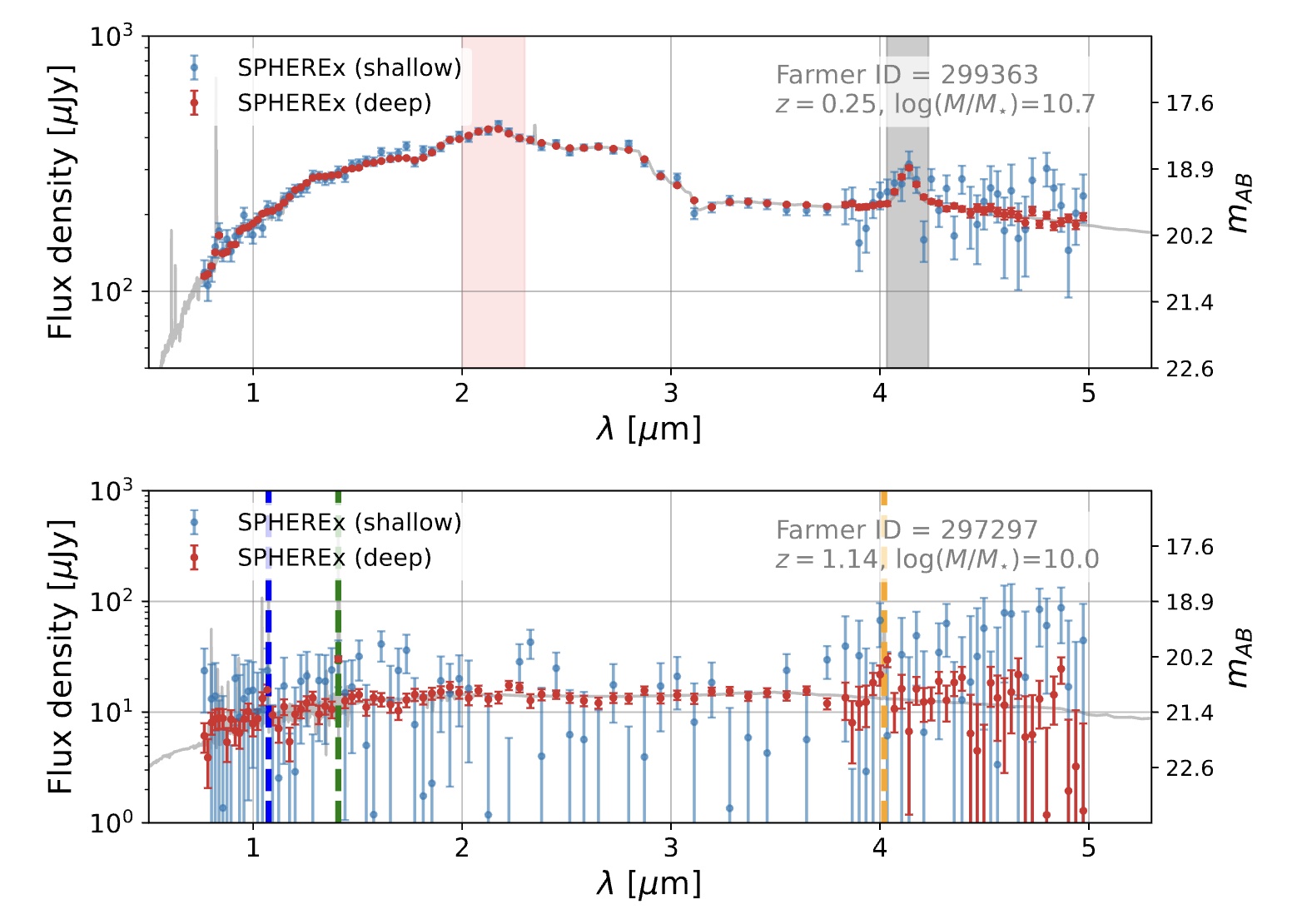
I am also a member of the SPHEREx cosmology team, for which I have developed realistic galaxy SED simulations and synthetic SPHEREx spectrophotometry through the tool CLIPonSS (Conditional LIne Painting on Synthetic Spectra). We are using these simulations to test redshift recovery for the SPHEREx cosmology sample, which will require hundreds of millions of accurate redshifts to constrain the primordial non-Gaussianity parameter fNL through the scale-dependent bias. I am interested in applying new methodologies to improve SED modeling and redshift estimates for these and other spectrophotometric samples.
Probabilistic cataloging
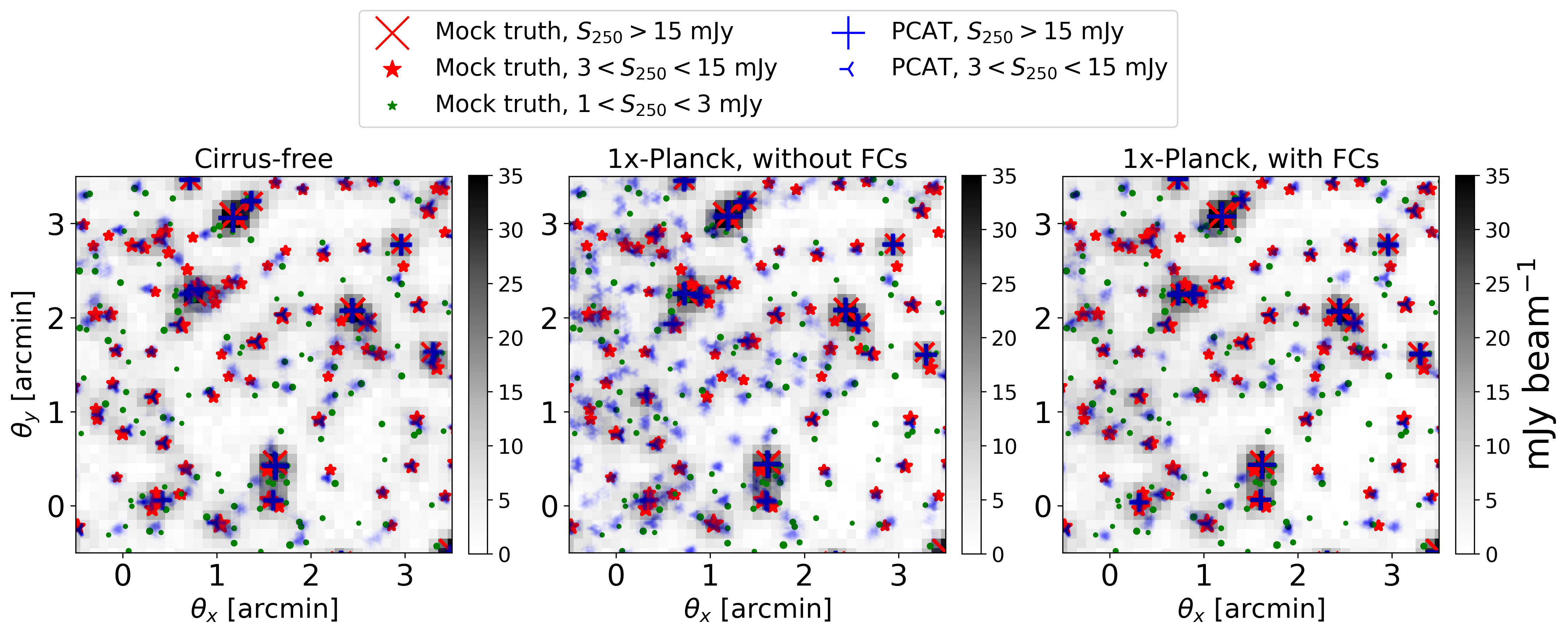
I am also a developer of the Bayesian, transdimensional forward modeling approach "probabilistic cataloging" (PCAT for short). Starting from work applying multi-band probabilistic cataloging to SDSS images for my college senior thesis, I later extended the methodology during my PhD to coherently model point-like and diffuse signals in astronomical images, leading to a measurement of the ICM temperature for galaxy cluster RXJ 1347 through the thermal and relativistic Sunyaev-Zel'dovich effect Butler+Feder 2022) and the publication of the code PCAT-DE, with documentation available here and implementation detailed in Feder et al. 2023. The code is flexible and has been made available for use by the broader astronomy community.
Selected Publications
View all publications on ADS → | Google Scholar →
Ongoing and near-future spectroscopic surveys, such as DESI, DESI-II and Spec-S5, rely on imaging-based selections to construct uniform, three-dimensional tracers of large-scale structure. While spectroscopic data from these surveys constrain the baryonic acoustic oscillation (BAO) feature with high precision...
Ongoing and near-future spectroscopic surveys, such as DESI, DESI-II and Spec-S5, rely on imaging-based selections to construct uniform, three-dimensional tracers of large-scale structure. While spectroscopic data from these surveys constrain the baryonic acoustic oscillation (BAO) feature with high precision, the imaging surveys used for target selection can provide useful information on the angular diameter distance $D_A(z)$. In this work we explore the feasibility of angular BAO measurements for the Intermediate-Band Imaging Survey (IBIS) using recent constraints on clustering from a pilot survey spanning $2.2 < z < 3.5$. Through Fisher forecasts, we find that a 5000 deg² survey of LAEs with realistic bias, a tracer density of $2\times10^{-4}$ $(h/\mathrm{Mpc})^3$ and interloper fraction $f_\mathrm{int}=10\%$ can constrain the BAO dilation parameter $\alpha$ at $z_\mathrm{eff}=2.8$ with a precision of 2.6%, with dependence on the sample properties that is consistent with shot noise-dominated measurements. We then explore medium-band survey specifications for the planned Stage-V Spectroscopic Instrument (Spec-S5) and beyond, demonstrating the potential for precise high-redshift BAO measurements. Our forecasts motivate early measurements of BAO from these imaging surveys, which may inform later spectroscopic analyses.
We present new anisotropy measurements in the near-infrared (NIR) for angular multipoles $300 < \ell < 10^5$ using imaging data at 1.1 μm and 1.8 μm from the fourth flight of the Cosmic Infrared Background ExpeRiment (CIBER)...
We present new anisotropy measurements in the near-infrared (NIR) for angular multipoles $300 < \ell < 10^5$ using imaging data at 1.1 μm and 1.8 μm from the fourth flight of the Cosmic Infrared Background ExpeRiment (CIBER). Using improved analysis methods and higher quality fourth flight data, we detect surface brightness fluctuations on scales $\ell < 2000$ with CIBER auto-power spectra at $\sim14\sigma$ and $18\sigma$ for 1.1 and 1.8 μm, respectively, and at $\sim10\sigma$ in cross-power spectra. The CIBER measurements pass internal consistency tests and represent a $5{-}10\times$ improvement in power spectrum sensitivity on several-arcminute scales relative to that of existing studies. Through cross-correlations with tracers of diffuse galactic light (DGL), we determine that scattered DGL contributes $<10\%$ to the observed fluctuation power at high confidence. On scales $\theta > 5'$, the CIBER auto- and cross-power spectra exceed predictions for integrated galactic light (IGL) and integrated stellar light (ISL) by over an order of magnitude, and are inconsistent with our baseline IGL+ISL+DGL model at high significance. We cross-correlate two of the CIBER fields with 3.6 μm and 4.5 μm mosaics from the Spitzer Deep Wide-Field Survey and find similar evidence for departures from Poisson noise in Spitzer-internal power spectra and CIBER $\times$ Spitzer cross-power spectra. A multi-wavelength analysis indicates that the auto-power of the fluctuations at low-$\ell$ is bluer than the Poisson noise from IGL and ISL; however, for $1' < \theta < 10'$, the cross-correlation coefficient $r_\ell$ of nearly all band combinations decreases with increasing $\theta$, disfavoring astrophysical explanations that invoke a single correlated sky component.
Precise, unbiased measurements of extragalactic background anisotropies require careful treatment of systematic effects in fluctuation-based, broad-band intensity mapping measurements. In this paper we detail improvements in methodology for the Cosmic Infrared Background ExpeRiment (CIBER)...
Precise, unbiased measurements of extragalactic background anisotropies require careful treatment of systematic effects in fluctuation-based, broad-band intensity mapping measurements. In this paper we detail improvements in methodology for the Cosmic Infrared Background ExpeRiment (CIBER), concentrating on flat field errors and source masking errors. In order to bypass the use of field differences, which mitigate flat field errors but reduce sensitivity, we characterize and correct for the flat field on pseudo-power spectra, which includes both additive and multiplicative biases. To more effectively mask point sources at 1.1 μm and 1.8 μm, we develop a technique for predicting masking catalogs that utilizes optical and NIR photometry through random forest regression. This allows us to mask over two Vega magnitudes deeper than the completeness limits of 2MASS alone, with errors in the shot noise power remaining below <10% at all masking depths considered. Through detailed simulations of CIBER observations, we validate our formalism and demonstrate unbiased recovery of the sky fluctuations on realistic mocks. We demonstrate that residual flat field errors comprise <20% of the final CIBER power spectrum uncertainty with this methodology.
The Universe SPHEREx Will See: Empirically Based Galaxy Simulations and Redshift Predictions
Jul 2024We simulate galaxy properties and redshift estimation for SPHEREx, the next NASA Medium Class Explorer. To make robust models of the galaxy population and test spectro-photometric redshift performance for SPHEREx, we develop a set of synthetic spectral energy distributions based on detailed fits to COSMOS2020 photometry spanning 0.1-8 micron...
We simulate galaxy properties and redshift estimation for SPHEREx, the next NASA Medium Class Explorer. To make robust models of the galaxy population and test spectro-photometric redshift performance for SPHEREx, we develop a set of synthetic spectral energy distributions based on detailed fits to COSMOS2020 photometry spanning 0.1-8 micron. Given that SPHEREx obtains low-resolution spectra, emission lines will be important for some fraction of galaxies. Here we expand on previous work, using better photometry and photometric redshifts from COSMOS2020, and tight empirical relations to predict robust emission line strengths and ratios. A second galaxy catalog derived from the GAMA survey is generated to ensure the bright (mAB<18 in the i-band) sample is representative over larger areas. Using template fitting to estimate photometric continuum redshifts, we forecast redshift recovery of 19 million galaxies over 30000 sq. deg. with σz<0.003(1+z), 445 million with σz<0.1(1+z) and 810 million with σz<0.2(1+z). We also find through idealized tests that emission line information from spectrally dithered flux measurements can yield redshifts with accuracy beyond that implied by the naive SPHEREx channel resolution, motivating the development of a hybrid continuum-line redshift estimation approach.
We have released the full set of simulated SEDs, which span 0.1-8 micron, and synthetic emission line catalogs from this work on Zenodo. The simulations are readily adaptable and can be used in multi-survey predictions beyond SPHEREx science cases.
Observational data from astronomical imaging surveys contain information about a variety of source populations and environments, and their complexity will increase substantially as telescopes become more sensitive...
Observational data from astronomical imaging surveys contain information about a variety of source populations and environments, and their complexity will increase substantially as telescopes become more sensitive. Even for existing observations, measuring the correlations between pointlike and diffuse emission can be crucial to correctly inferring the properties of any individual component. For this task, information is typically lost, because of conservative data cuts, aggressive filtering, or incomplete treatment of contaminated data. We present the code PCAT-DE, an extension of probabilistic cataloging, designed to simultaneously model pointlike and diffuse signals. This work incorporates both explicit spatial templates and a set of nonparametric Fourier component templates into a forward model of astronomical images, reducing the number of processing steps applied to the observed data. Using synthetic Herschel-SPIRE multiband observations, we demonstrate that point-source and diffuse emission can be reliably separated and measured. We present two applications of this model. For the first, we perform point-source detection/photometry in the presence of galactic cirrus and demonstrate that cosmic infrared background galaxy counts can be recovered in cases of significant contamination. In the second, we show that the spatially extended thermal Sunyaev–Zel'dovich effect signal can be reliably measured even when it is subdominant to the pointlike emission from individual galaxies.
We present a measurement of the relativistic corrections to the thermal Sunyaev–Zel'dovich (SZ) effect spectrum, the rSZ effect, toward the massive galaxy cluster RX J1347.5-1145 by combining submillimeter images from Herschel-SPIRE with millimeter wavelength Bolocam maps...
We present a measurement of the relativistic corrections to the thermal Sunyaev–Zel'dovich (SZ) effect spectrum, the rSZ effect, toward the massive galaxy cluster RX J1347.5-1145 by combining submillimeter images from Herschel-SPIRE with millimeter wavelength Bolocam maps. Our analysis simultaneously models the SZ effect signal, the population of cosmic infrared background galaxies, and the galactic cirrus dust emission in a manner that fully accounts for their spatial and frequency-dependent correlations. Gravitational lensing of background galaxies by RX J1347.5-1145 is included in our methodology based on a mass model derived from the Hubble Space Telescope observations. Utilizing a set of realistic mock observations, we employ a forward modeling approach that accounts for the non-Gaussian covariances between the observed astrophysical components to determine the posterior distribution of SZ effect brightness values consistent with the observed data. We determine a maximum a posteriori (MAP) value of the average Comptonization parameter of the intracluster medium (ICM) within $R_{2500}$ to be $\langle y \rangle_{2500} = 1.56 \times 10^{-4}$, with corresponding 68% credible interval $[1.42, 1.63] \times 10^{-4}$, and a MAP ICM electron temperature of $\langle T_{\mathrm{sz}} \rangle_{2500} = 22.4$ keV with 68% credible interval spanning $[10.4, 33.0]$ keV. This is in good agreement with the pressure-weighted temperature obtained from Chandra X-ray observations, $\langle T_{x,\mathrm{pw}} \rangle_{2500} = 17.4 \pm 2.3$ keV. We aim to apply this methodology to comparable existing data for a sample of 39 galaxy clusters, with an estimated uncertainty on the ensemble mean $\langle T_{\mathrm{sz}} \rangle_{2500}$ at the $\simeq 1$ keV level, sufficiently precise to probe ICM physics and to inform X-ray temperature calibration.
Fast and accurate simulations of the non-linear evolution of the cosmic density field are a major component of many cosmological analyses, but the computational time and storage required to run them can be exceedingly large. For this reason, we use generative adversarial networks (GANs) to learn a compressed representation of the 3D matter density field...
Fast and accurate simulations of the non-linear evolution of the cosmic density field are a major component of many cosmological analyses, but the computational time and storage required to run them can be exceedingly large. For this reason, we use generative adversarial networks (GANs) to learn a compressed representation of the 3D matter density field that is fast and easy to sample, and for the first time show that GANs are capable of generating samples at the level of accuracy of other conventional methods. Using sub-volumes from a suite of GADGET-2 N-body simulations, we demonstrate that a deep-convolutional GAN can generate samples that capture both large- and small-scale features of the matter density field, as validated through a variety of n-point statistics. The use of a data scaling that preserves high-density features and a heavy-tailed latent space prior allow us to obtain state of the art results for fast 3D cosmic web generation. In particular, the mean power spectra from generated samples agree to within 5% up to k=3 and within 10% for k<5 when compared with N-body simulations, and similar accuracy is obtained for a variety of bispectra. By modeling the latent space with a heavy-tailed prior rather than a standard Gaussian, we better capture sample variance in the high-density voxel PDF and reduce errors in power spectrum and bispectrum covariance on all scales. Furthermore, we show that a conditional GAN can smoothly interpolate between samples conditioned on redshift. Deep generative models, such as the ones described in this work, provide great promise as fast, low-memory, high-fidelity forward models of large-scale structure.
Probabilistic cataloging (PCAT) outperforms traditional cataloging methods on single-band optical data in crowded fields. We extend our work to multiple bands, achieving greater sensitivity (∼0.4 mag) and greater speed (500×) compared to previous single-band results...
Probabilistic cataloging (PCAT) outperforms traditional cataloging methods on single-band optical data in crowded fields. We extend our work to multiple bands, achieving greater sensitivity (∼0.4 mag) and greater speed (500×) compared to previous single-band results. We demonstrate the effectiveness of multiband PCAT on mock data, in terms of both recovering accurate posteriors in the catalog space and directly deblending sources. When applied to Sloan Digital Sky Survey (SDSS) observations of M2, taking Hubble Space Telescope data as truth, our joint fit on r- and i-band data goes ∼0.4 mag deeper than single-band probabilistic cataloging and has a false discovery rate less than 20% for F606W ≤ 20. Compared to DAOPHOT, the two-band SDSS catalog fit goes nearly 1.5 mag deeper using the same data and maintains a lower false discovery rate down to F606W ∼ 20.5. Given recent improvements in computational speed, multiband PCAT shows promise in application to large-scale surveys and is a plausible framework for joint analysis of multi-instrument observational data.
Teaching & Mentorship
I've had the privelege to mentor a number of high school, undergraduate, and graduate students in research projects in astronomy, intensity mapping, and machine learning applications. If you are interested in discussing potential research opportunities, or have general questions about working in observational cosmology, please feel free to reach out to me at rmfeder@berkeley.edu.
Contact
Or email me directly at rmfeder@berkeley.edu